
ADHD, Emotional Dysregulation, and Rejection Sensitivity: Why Some Children Feel Everything So Deeply
Updated: Apr 26
Parents and teachers regularly find themselves trying to make sense of emotional reactions that feel out of proportion to what just happened.
In the classroom, this could look like a simple correction or redirection. On the playground, a disagreement on what game to play, or a task that doesn’t go as expected, can quickly escalate into distress, shutdown, or refusal.
For children with ADHD, these responses are not random or attention-seeking. They reflect how their brain processes emotion in the moment. When we understand the interaction between ADHD and rejection sensitivity, these reactions become less confusing and far more predictable.
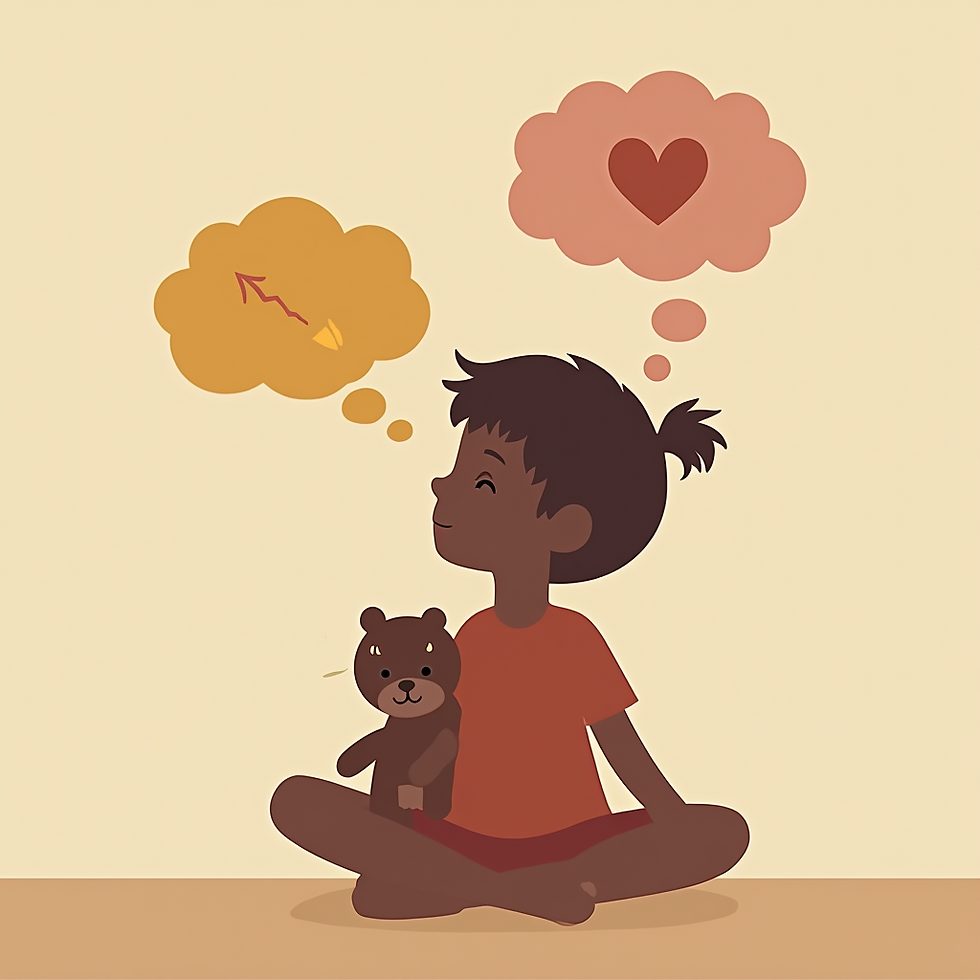
ADHD and “Big Emotions”: What’s Actually Happening in the Brain
ADHD is not just about attention or hyperactivity. It’s a neurodevelopmental difference that affects how the brain processes emotion as well.
At a brain level, emotional regulation involves a dynamic between:
The amygdala (detects threat, triggers emotional reactions)
The prefrontal cortex (slows things down, evaluates, regulates)
In ADHD, this system works a little differently.
Research shows differences in the connectivity between emotional centres (like the amygdala) and regulatory regions of the brain . At the same time, the prefrontal cortex (responsible for impulse control and emotional regulation) is often less efficient or slower to engage .
What this means in real life:
The emotional brain fires quickly.
The regulating brain arrives late.
So the feeling isn’t just big, it’s also fast.
Before a child has time to think, reflect, or use a strategy, the emotional wave has already taken over.
Why It Feels So Intense
Children with ADHD aren’t just experiencing emotions more often. they’re experiencing them more deeply and more physiologically.
Emotional dysregulation in ADHD is increasingly recognised as a core experience
Their nervous system tends to:
Register emotional cues quickly
Amplify emotional signals
Struggle to “downshift” once activated
So when a child says “it feels like everything”.It actually does.
Where Rejection Sensitivity Fits In (RSD)
Now layer in something many ADHD children experience: Rejection Sensitive Dysphoria (RSD).
RSD describes an intense emotional response to perceived rejection, criticism, or failure .
And importantly it doesn’t require actual rejection. In practice, I have seen this be triggered by:
a friend not being available for a catch up
School/ work proposals not being selected,
changes in eye gaze when in conversation,
pairwork and teamwork (obvious one)
being spoken to in a firm tone.
For these children, the brain interprets these moments as deeply threatening.
The emotional response is immediate and overwhelming, and often described as emotional “pain” rather than just sadness .
From the outside, it can look like:
“Overreacting”
Avoidance (“I’m not doing it”)
Perfectionism (“I won’t try unless I know I can do it right”)
Meltdowns or shutdowns
But from the inside, it feels like:
“Something is wrong with me.” “I’m not doing this right.” “I don’t belong.”
When we don’t understand this lens, we tend to respond to the behaviour:
“You need to be more resilient”
“It’s not a big deal”
“Just try again”
But here’s the mismatch:
We are talking to the thinking brain…while the child is in a fully activated emotional brain state.
And when a child feels unsafe, exposed, or overwhelmed, logic won’t land.
A More Accurate Lens
Instead of asking:
“Why are they reacting like this?”
Try:
“What did their nervous system just perceive?”
Because often, what looks like:
Defiance → is overwhelm
Avoidance → is protection
Perfectionism → is fear of emotional pain
“Overreaction” → is a fast, intense threat response
What This Means for Parents and Teachers
If we understand ADHD + RSD as a nervous system experience, our response shifts.
We move from:
correcting behaviour
to
supporting regulation and safety
Practical Shifts You Can Use
1. Regulate before you reason
When emotions are high, the goal is not insight, it’s safety.
Lower your voice
Reduce language
Stay physically and emotionally calm
You are lending them your regulated nervous system.
2. Make feedback feel safe
Because feedback can feel like rejection, how it’s delivered matters.
Instead of:
“Try again, this isn’t right”
Try:
“Let’s work through this together. You’re on the right track”
Same message. Different nervous system impact.
3. Understand avoidance as protective
If a child refuses, shuts down, or avoids:
They’re not being lazy.
They’re trying to avoid the emotional pain linked to getting it wrong.
4. Support recovery, not just behaviour
After a big reaction, the work isn’t:
“What was the consequence?”
It’s:
helping them come back to baseline
restoring a sense of connection
gently building reflection later
5. Build emotional language slowly
Children with ADHD often feel intensely but struggle to label or organise those feelings.
Support might look like:
“That felt really big”
“I wonder if that felt frustrating or disappointing?”
You’re helping connect emotion → language → understanding.
The Bigger Picture
When we shift how we see these children, everything changes.
They are not:
too sensitive
too dramatic
too difficult
They are:
neurologically wired for intensity
deeply responsive to their environment
still developing the systems needed to regulate that intensity
And when they’re met with understanding instead of correction, you start to see something important: The intensity doesn’t disappear — but it becomes something they can hold, not something that overwhelms them.
If you’re noticing these patterns regularly — big reactions to small moments, shutdown, avoidance, or “I can’t do it” — it can be difficult to know how to respond in the moment.
I’ve created a practical guide that walks through:
what’s driving these reactions
how to recognise the pattern quickly
what to say and do in the moment
If your child is experiencing frequent emotional overwhelm, shutdown, or avoidance, a tailored approach can help reduce distress and build regulation skills. If you’d like support with this, you can get in touch to discuss next steps.


Comments